
Video Documentary vs Written Memoir
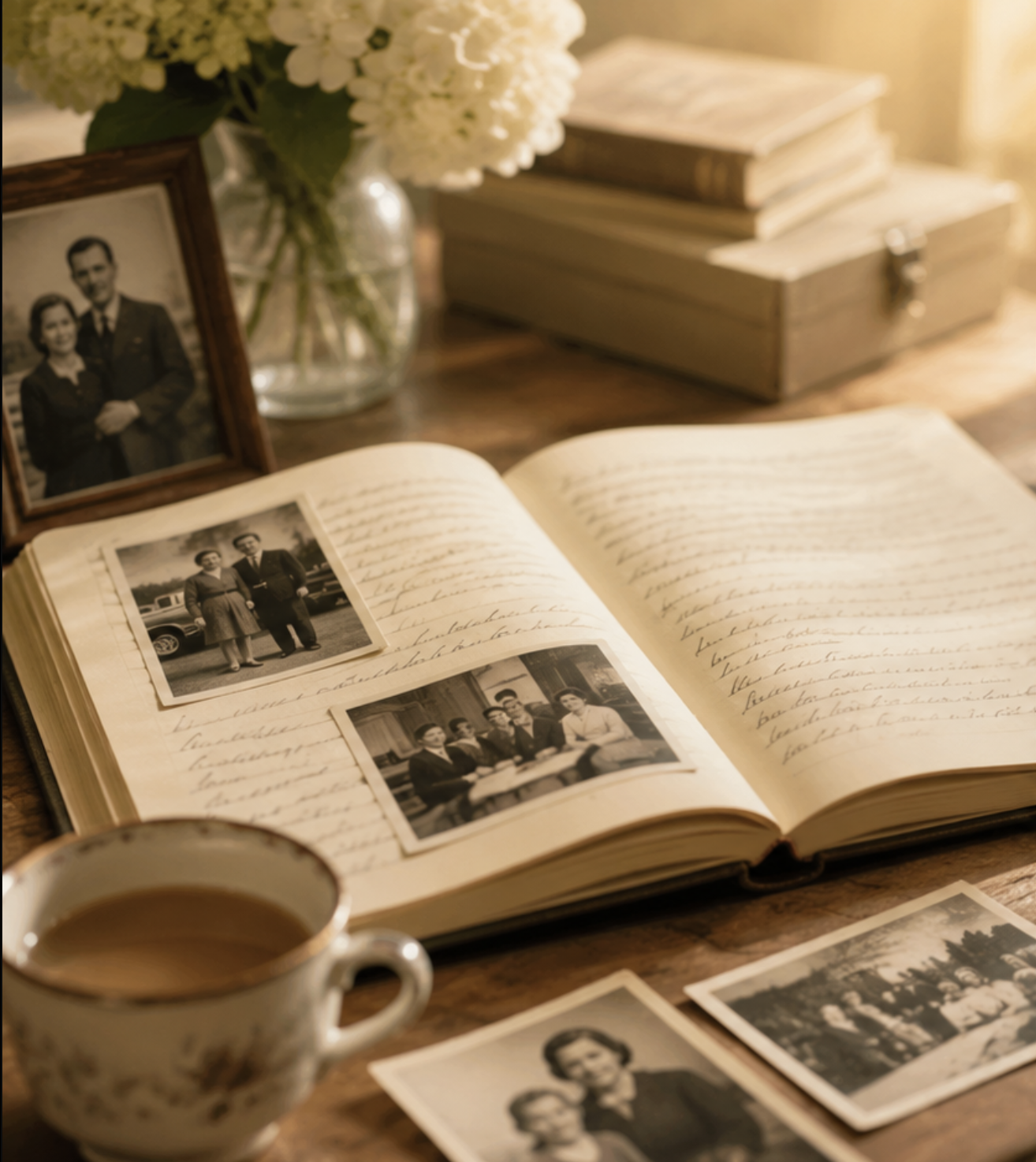
When a family starts thinking about preserving a parent or grandparent’s life story, one of the first questions is usually about format.
Should we help them write a memoir?
Should we record them on video?
Should we try to do both?
It is a good question, because both options can be meaningful. A written memoir can preserve important stories, details, names, dates, and family history in a way that feels permanent. A video documentary can preserve something different: the person’s voice, expressions, personality, emotion, and the way they tell the story themselves.
At Story & Legacy Films, we create cinematic Legacy Films for families who want to preserve more than a written record. We help families capture a loved one’s life story, values, memories, and hard-earned wisdom through a guided video interview, then weave in family photos, home videos, keepsakes, and meaningful visuals so the final film feels like a true family keepsake.
So when you compare a video documentary vs written memoir, the real question is not which one is “good” and which one is “bad.”
The better question is: what do you want your family to be able to experience later?
A Written Memoir Preserves the Record
A written memoir can be a beautiful way to preserve family history.
It gives someone room to write about their childhood, parents, marriage, work, faith, military service, hard seasons, family traditions, and the stories they want future generations to remember.
For families who care about detail, a memoir can be especially helpful. It can include names, places, dates, timelines, family branches, and memories that may not all fit into a film. It can be printed, copied, placed on a shelf, and passed down.
There is something special about holding a book that contains someone’s life story.
The challenge is that writing a memoir takes a lot of work.
A lot of people say they want to write one someday, but “someday” can stretch on for years. It is hard to sit in front of a blank page and figure out how to organize an entire life. Even people with wonderful stories may not know where to begin, what to include, or how to make their memories sound the way they want them to sound.
That is one reason families often start with the idea of a memoir and then never quite finish it.
Not because the story does not matter.
Because the process is hard.
A Video Documentary Preserves the Person
A video documentary does something a written memoir cannot fully do.
It lets your family see and hear the person telling the story.
That matters more than people realize.
A written memoir can describe someone’s laugh, but a video lets you hear it. A memoir can explain that someone was emotional about a memory, but a video lets you see their face as they talk about it. A memoir can tell future generations what happened, but a video documentary lets them sit with the person for a while and experience the way they told the story.
That is why video can be so powerful for family history.
It preserves presence.
And later, that may be the thing your family misses most.
Families do not usually say, “I wish I had one more paragraph.” They say things like, “I wish I could hear their voice again,” or “I wish my kids could have known what they were really like.”
A video documentary helps preserve that part.
A Memoir Can Be More Detailed, but a Film Can Be Easier to Receive
One of the strengths of a written memoir is that it can hold a lot of information.
That can be important, especially if your family wants a detailed written history. A memoir can include stories that are too long for a film, extra background, family trees, letters, recipes, and reflections that deserve to be saved.
But there is another question families should ask.
Will future generations actually read it?
Some will, and that is wonderful. But many families know the reality. A long written memoir may be treasured, but it may not be opened often. Children and grandchildren may appreciate having it, but they may not sit down and read the whole thing for years.
A video documentary can be easier for the family to receive.
People can gather in a living room and watch it together. Grandchildren can hear the voice of someone they love. Adult children can see their parent as a whole person, not just through the role of Mom, Dad, Grandma, or Grandpa.
That does not make a film better in every way.
It just means video often reaches people differently.
A memoir asks the reader to come to the story.
A film brings the person into the room.
A Written Memoir Depends on Someone Being Willing to Write
This is one of the biggest practical differences.
A written memoir usually depends on someone doing a lot of writing, remembering, organizing, editing, and finishing.
For some people, that is perfect. They enjoy writing. They think clearly on paper. They like having time to reflect privately before sharing their thoughts.
But many parents and grandparents do not want a homework assignment.
They may have incredible stories, but that does not mean they want to write chapters about them. They may feel overwhelmed by the blank page. They may not think they are good writers. They may start with good intentions and then stop because the project feels too big.
A video documentary can be much easier for that kind of person.
Instead of asking them to write their life story alone, a guided interview allows them to simply talk. They can sit in a comfortable place and answer thoughtful questions. They do not have to know how to structure everything. They do not have to make it sound perfect.
They just have to be themselves.
For many families, that is a much more natural way to preserve the story.
A Guided Interview Can Bring Out Stories the Family Might Miss
One of the most important parts of a good legacy film is the guided conversation.
Most families already know some of the obvious questions to ask. They can ask where someone was born, what their childhood was like, how they met their spouse, what they did for work, and what they remember about raising a family.
Those questions are a good start.
But the deeper stories usually come from follow-up questions.
When someone talks about a hard season, a good interviewer may ask what helped them get through it. When they mention a decision that changed their life, the interviewer may ask what they were afraid of at the time or what they understand now that they did not understand then. When they talk about family, work, faith, marriage, sacrifice, or regret, the conversation can gently move from facts into meaning.
That is often where the real value is.
A legacy video documentary should not only preserve what happened. It should help your loved one explain why it mattered.
That is one reason families hire Story & Legacy Films. The camera matters, but the conversation matters more.
Photos and Home Videos Can Work in Both, but They Feel Different on Film
Old photos can be used in a written memoir, and they should be.
A memoir with photos, captions, and stories attached can be much more meaningful than text alone. It gives the reader faces, places, and visual context.
But photos and home videos feel different when they are woven into a film.
Imagine your parent talking about the first house they bought, and as they describe it, the old photo appears on screen. Imagine your grandparent talking about their wedding day while the family sees the actual wedding photo. Imagine them explaining a keepsake, a family recipe, a childhood home, or a person your children never got to meet while the visual appears with their voice.
That creates a different kind of connection.
The family is not just reading about the memory.
They are hearing the person explain it while seeing the piece of family history connected to it.
That is one of the reasons a Legacy Film can feel so personal. It brings the interview, photos, home videos, keepsakes, and meaningful visuals together into one experience.
The Best Option May Be Both
This does not have to be a competition.
A video documentary and a written memoir can work beautifully together.
The memoir can preserve the detailed written record. It can include timelines, extra stories, family names, and written reflections. The film can preserve the person’s voice, face, emotion, humor, and presence.
Together, they can give the family a fuller picture.
But if your family has to choose where to begin, video is often the place I would start.
The reason is simple.
A memoir can sometimes be created later from notes, letters, recordings, and family memories. It may not be perfect, but it can still be assembled.
A video of your loved one telling their story in their own voice has to be captured while they can still do it.
That window matters.
How Story & Legacy Films Helps
At Story & Legacy Films, we help families create cinematic Legacy Films that preserve the stories, voice, values, and wisdom of someone they love.
We begin with a short, relaxed discovery call to understand who the film is for, what your family wants preserved, and what questions you have. You do not need to have the whole project figured out before reaching out. Most families simply know there is someone they love whose story should not be lost.
Then we film the interview in person, in a familiar and meaningful setting. We use professional cameras, lighting, and audio, but the heart of the process is the guided conversation. The goal is not to make your loved one perform. The goal is to help them feel comfortable enough to share their memories, personality, values, and hard-earned wisdom naturally.
After filming, we weave in family photos, home videos, keepsakes, and meaningful visuals. These pieces help the final film feel connected to the life being shared, so future generations can see the people, places, and memories that shaped the story.
The result is not just a video recording.
It is a finished family keepsake your family can watch, share, and return to.
So, Video Documentary or Written Memoir?
A written memoir is a wonderful way to preserve details.
A video documentary is one of the best ways to preserve presence.
For many families interested in a legacy film, that is the deciding factor. They do not just want future generations to know the facts. They want them to hear the person’s voice, see their expressions, understand their personality, and feel connected to the story in a more human way.
A memoir helps your family read about a life.
A Legacy Film helps them experience the person telling it.
Both can matter. But if your family is worried about losing the voice, the stories, the emotion, and the wisdom of someone you love, a video documentary may be the most meaningful place to begin.
Let's Talk About Your Family's Story
Fill out the form below to start the conversation and see if a legacy film is the right fit.