
What Your Photo Album Can’t Tell Your Grandchildren
Don’t Let Their Stories Fade!
Download the free Legacy Story Starter Guide — a simple reflection guide to help you uncover the memories, lessons, values, and messages your family may one day treasure most.
One day, your kids might open an old photo album and see a picture of your dad standing in front of a house they barely recognize.
They might ask, “Where was this?”
And maybe you’ll know.
You’ll say, “That was Grandma and Grandpa’s first house.”
Then they might ask, “Who’s that guy next to him?”
And maybe you’ll know that too.
“Oh, that was his brother.”
But then they ask the question that’s harder to answer.
“What was Grandpa like back then?”
And suddenly, the photo album feels a little quieter.
Because you can tell them the name of the street. You can point out the old truck in the driveway. You can explain who was in the picture. But you may not know what your dad was thinking when that photo was taken. You may not know what that season of life cost him, what he was proud of, what he was worried about, or why that little house mattered so much to him.
That’s the strange thing about photo albums.
They can hold the image, but they can’t always hold the story.
"A photo album can show your grandchildren what happened, but it can't tell them what it meant. Discover why preserving the story behind the photo matters."
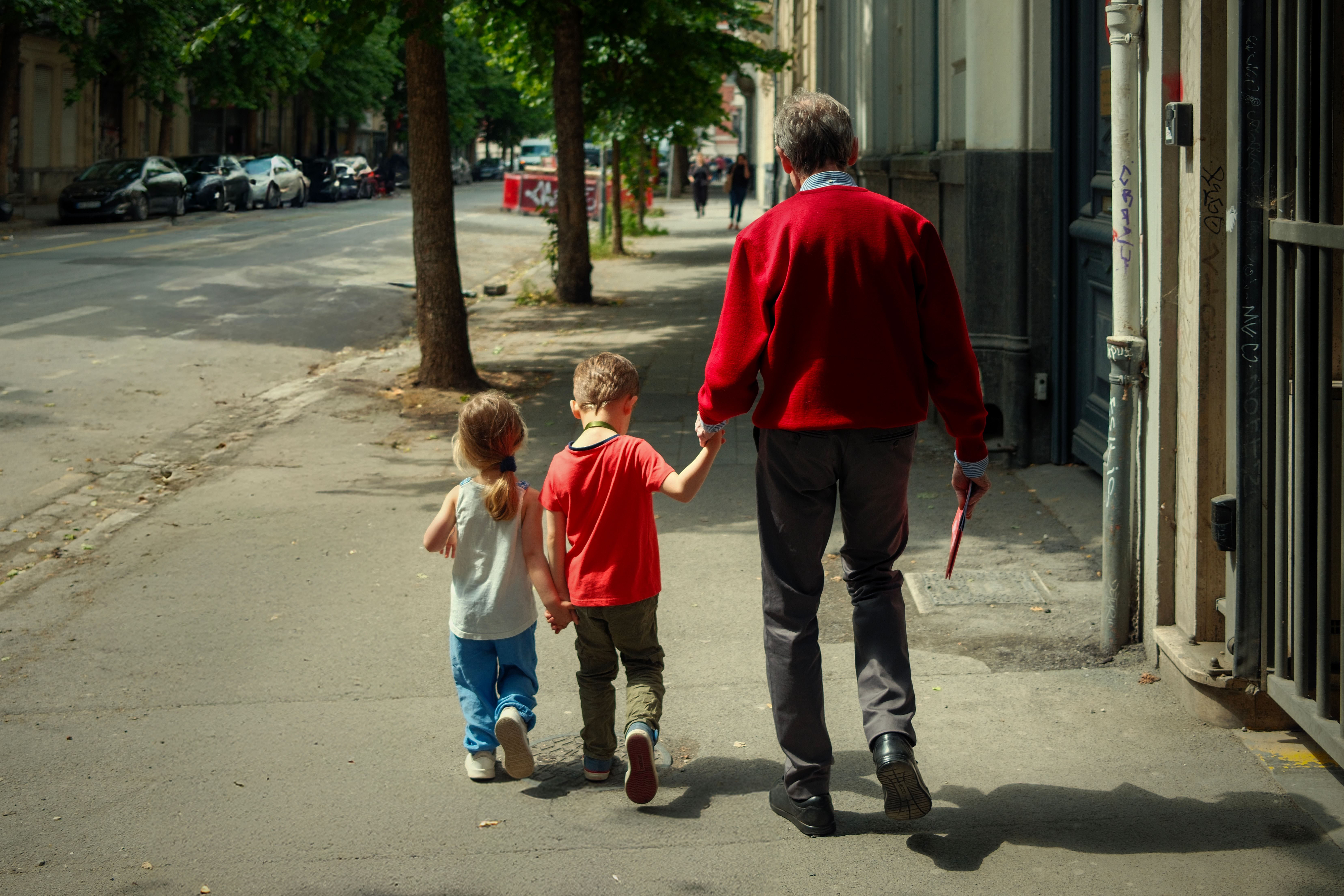
The picture that needed a voice
Imagine a daughter named Allison.
She’s helping her mom sort through old boxes in the garage. They’re not doing anything dramatic. Just one of those Saturday projects that starts with good intentions and turns into piles of photos, old birthday cards, school papers, and things nobody knows what to do with.
At some point, Allison finds a photo of her mom standing in a tiny kitchen. The wallpaper is loud. The cabinets are old. There’s a baby bottle on the counter and a stack of dishes by the sink.
Allison laughs and says, “I’ve never seen this one.”
Her mom looks at it for a long second.
Then she says, “That was the apartment we lived in when your dad got laid off.”
Allison had heard about that season before, but only in passing. She knew money had been tight when she was little. She knew her parents had “made it work,” which is the kind of phrase parents often use when they don’t want to explain how hard something really was.
But this time, because the photo was sitting right there in her hand, Allison asked more.
“What was that like?”
Her mom smiled a little, but her eyes changed.
She talked about stretching groceries, crying quietly after Allison went to sleep, and trying to make the apartment feel happy even when she was scared. She talked about how her own mother would come over with bags of food and pretend she had “accidentally bought too much.” She talked about learning that a family can feel safe even when life is uncertain, if the people in it keep choosing each other.
Allison had seen that photo as an old kitchen.
Her mom remembered it as one of the hardest and most important seasons of her life.
That’s what a photo album can’t tell your grandchildren.
It can show them the kitchen, the clothes, the baby bottle, and the wallpaper. But it can’t tell them what their grandmother carried in that room. It can’t explain the love behind the tired eyes or the strength it took to keep going.
Only the person who lived it can do that.
Why photo albums matter, but still need help
I love photo albums. I think families should keep them, organize them, scan them, label them, and pass them down.
There is something powerful about holding a real photo in your hands. It makes the past feel close. It gives faces to names and places to stories.
But a photo album by itself can leave a lot of silence.
Your grandchildren might know what their great-grandfather looked like, but not how he sounded when he told a joke. They might see your mom holding you as a baby, but not know what motherhood felt like to her. They might see the family business, the first home, the wedding day, the old car, the farm, the uniform, the vacation, or the Christmas morning, but miss the meaning behind all of it.
That’s why the conversation around photo album vs legacy film matters.
It’s not really about choosing one over the other. A photo album and a legacy film do different things. A photo album helps your family see the memories. A legacy film helps them understand the person inside those memories.
When the two work together, something really meaningful can happen.
The photo gives the story a place to begin. The film gives the person a chance to explain why it mattered.
What your grandchildren may want later
It’s easy to think future generations will mostly want the big facts.
Where someone was born. What they did for work. When they got married. How many kids they had. Where they lived.
Those facts matter, but they’re usually not what people ache for later.
They want the voice.
They want the laugh.
They want the way Grandpa paused before giving advice.
They want to know why Grandma always cared so much about Sunday dinner.
They want to understand what their family went through, what they believed, what they survived, and what they hoped would carry forward.
A photo album can become a beautiful map of your family’s past, but someone still needs to walk the next generation through it.
That’s where a legacy film can help.
It gives your parent, grandparent, spouse, or loved one the chance to sit down and talk through the memories while they can still explain them in their own voice. The old photos can be woven into the film, but instead of being silent images, they become part of a living story.
A simple thing you can do this week
Pick one photo.
Not fifty. Not the whole album. Just one.
Choose a picture that feels like it probably has a story behind it, then ask the person in your family who would know:
“What was happening here?”
Then ask one more question:
“What do you remember feeling during that season?”
That second question is where the real story often begins.
You might hear something funny. You might hear something tender. You might hear something your family has never heard before.
And even if all you do is write down a few notes, you’ll have preserved more than the photo alone could hold.
At Story & Legacy Films, this is a big part of what we help families do. We create cinematic legacy films that preserve a loved one’s voice, stories, values, memories, and hard-earned wisdom, often weaving family photos and old videos into the final film so future generations can understand the meaning behind what they’re seeing.
Because one day, your grandchildren may hold the photo album.
The real gift is making sure they can still hear the stories behind it.
If this is something you’ve been thinking about, fill out the form below. We can talk about who the film would be for, what photos and stories you’d want preserved, and whether a Story & Legacy Film feels like the right fit for your family.
Let's Talk About Your Family's Story
Fill out the form below to start the conversation and see if a legacy film is the right fit.
Preserve Your Family's Legacy
Every family has a story worth telling. Let us help you preserve yours in a cinematic, guided legacy film.
Visit Story & Legacy Films