
At some point, a lot of adult children have the same thought.
“I really need to record my parents’ stories before I lose the chance.”
Maybe it happens when your dad tells a story you have heard a hundred times, but this time you realize your kids have never heard it. Maybe it happens when your mom pulls out an old photo and casually explains something about her childhood that you somehow never knew. Or maybe it happens after losing someone in the family, when everybody starts asking questions they wish they had asked sooner.
That is usually when the idea of making a family history film starts to feel important.
Not just a home video. Not just a quick phone recording. Something more meaningful than that.
A family history film is a way to preserve your parent’s voice, stories, personality, memories, and wisdom in a form your family can actually return to. It gives future generations a chance to understand where they came from, not just through dates and names, but through the real person telling the story.
The good news is that you can start simpler than you probably think.
You do not need to make a full documentary on day one. You do not need a perfect camera setup. You do not even need to know every question you are going to ask.
You just need to begin with a real conversation.
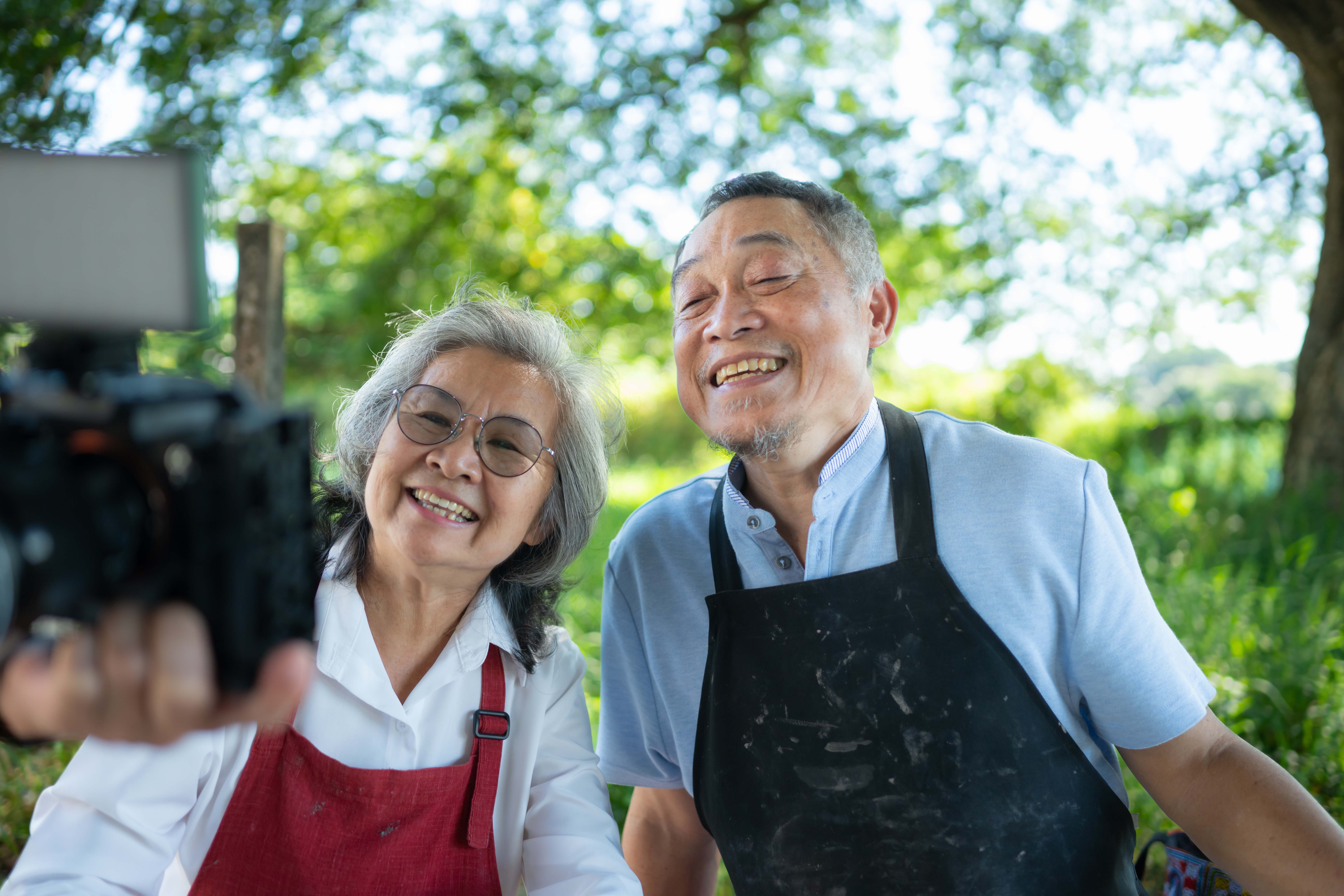
Start With the Person, Not the Project
The easiest way to make this feel overwhelming is to think, “I need to capture the entire family history.”
That sounds important, but it is also a lot of pressure. The second you start thinking about every generation, every photo album, every major life event, and every branch of the family tree, the whole thing can become so big that you never actually start.
So make it smaller.
Start with one person.
For most adult children, that person is a parent or grandparent. It is the person who carries stories the rest of the family does not know, or the person whose voice you know you will want preserved someday.
Before you worry about the full film, just ask yourself this: whose stories would be the hardest to lose?
That question usually makes the next step obvious.
Once you know who the film is for, everything else becomes easier. You can choose questions that fit their life. You can pick a location where they feel comfortable. You can gather photos that connect to their memories. You are no longer making a giant “family history project.” You are helping one person tell the story only they can tell.
Make It Feel Like a Conversation, Not an Interview
Most parents do not want to feel like they are being put under a spotlight.
Even if they like telling stories, the moment you say, “Okay, we are filming your life story now,” they may suddenly get stiff or self-conscious. That is normal. Most people are not used to being interviewed on camera, especially about things that matter.
So the tone matters.
The best family history films usually do not feel like someone is performing. They feel like a good conversation that happened to be recorded.
That means you do not need to sound like a news reporter. You do not need to ask perfect questions. You just need to be curious and patient.
Instead of starting with something huge like, “Tell me your whole life story,” start with something more specific. Ask about the house they grew up in. Ask what their parents were like. Ask what they remember about being a kid. Ask what life felt like when they were your age. Once they start talking, follow the story instead of rushing to the next question.
A lot of the best moments come from simple follow-ups. “What was that like?” “How did that change you?” “What do you understand now that you did not understand then?”
That is where a normal memory starts to become something your family can learn from.
Choose a Place Where They Can Relax
You do not need a fancy studio to make a family history film.
In fact, a familiar place can often be better.
Your parent’s living room, kitchen table, front porch, workshop, garden, office, or favorite chair may help them feel more like themselves. If there is a place connected to the family story, that can be even better. A childhood home, family cabin, farm, church, business, or old neighborhood can bring back memories that might not surface anywhere else.
The point is not to create a perfect background.
The point is to choose a space where your parent can settle in and talk naturally.
From a practical standpoint, look for a quiet room with soft light. Turn off the TV. Move away from loud appliances. Avoid sitting them directly in front of a bright window, because that can make their face look dark on camera. If you are filming with a phone, set it on a tripod or a stable surface so you are not holding it the whole time.
But do not get so focused on the setup that you forget the real goal.
A clean, simple video with clear audio and a meaningful story is already valuable.
Use Photos to Bring the Past Back
Old photos are one of the best tools you can use when making a family history film.
They give your parent something to react to. They bring back names, places, seasons, and details that might not come up from a question alone.
You can sit with them before the interview and go through a few albums together. Notice which photos make them pause. Notice which ones make them smile. Notice which ones cause them to say, “Oh, I haven’t thought about that in years.”
Those are the photos you probably want near you during the conversation.
You do not need to cover every picture. In fact, trying to do that can make the film feel slow and scattered. Choose a handful of meaningful images and let them open the door to deeper stories.
A photo of an old house might lead to a story about childhood. A picture from a wedding might lead to a conversation about marriage. A photo of your parent holding you as a baby might bring out what they were feeling in that season of life, what they were scared of, and what they hoped for your future.
That is the kind of material that makes a family history film feel personal.
Ask About Meaning, Not Just What Happened
This is where a family history film becomes different from a basic biography.
A biography can tell your family where someone was born, where they lived, what jobs they had, when they got married, and how many children they raised.
Those details matter, but they are not the deepest part.
The deeper value comes when your parent explains what those moments meant.
When they talk about a hard season, ask what helped them get through it. When they talk about raising kids, ask what they learned about love, patience, sacrifice, or fear. When they talk about work, ask what they were trying to build for the family. When they mention a mistake, ask what that experience taught them.
Not in a pushy way.
Just gently.
Most adult children know the broad version of their parent’s life, but they do not always know the inner version. They know what their parent did, but not always what it cost, what it taught them, or what they were carrying quietly at the time.
That is what your family will want later.
Not just the timeline. The meaning behind it.
Let Them Be Themselves
One of the biggest mistakes people make when filming a parent is trying to make everything too polished.
Of course, you want the film to look and sound good. But the goal is not to make your parent look like a public speaker. The goal is to preserve who they are.
Let them laugh. Let them pause. Let them repeat themselves a little. Let them say things the way they actually say them.
Those little human details are often what families treasure most later.
Your mom’s way of explaining things. Your dad’s dry humor. Your grandmother’s expressions. Your grandfather’s long pause before he says something meaningful.
Those are not mistakes to edit out of existence.
They are part of the person.
A good family history film should feel like your family member, not a polished version that has had all the realness removed.
Think About the Final Film Before You Start
Before you record hours of footage, it helps to think about what kind of film you actually want to create.
Do you want a short 10-minute family film that captures the highlights? Do you want a longer interview that preserves as much as possible? Do you want old photos and home videos woven in? Do you want it organized by life stages, or do you want it to feel more like a natural conversation?
There is no single right answer.
A shorter film may be easier for the whole family to watch together. A longer film may preserve more detail for future generations. Some families want both: a polished shorter version for everyone, and a longer archive version that keeps more of the full conversation.
Thinking about that ahead of time can help you ask better questions and avoid feeling lost when it is time to edit.
The most important thing is to make something your family will actually watch and return to.
A film does not have to include everything to be meaningful. It needs to preserve what matters most.
Do Not Forget About Audio
People often think video quality is the most important part, but audio matters even more.
Your family can forgive a video that looks simple. It is much harder to enjoy a video where they cannot clearly hear the person speaking.
So do whatever you can to make the audio clean.
Choose a quiet room. Sit close enough that the camera or phone can hear them. Turn off background noise. If you have a small microphone, use it. Even an inexpensive lapel mic can make a big difference.
This matters because the whole point of a family history film is to preserve the person’s voice.
Not just the sound of it, but the words, the tone, the personality, and the emotion that comes through when they talk about their life.
Save Everything Carefully
After the interview, do not leave the footage sitting only on your phone or camera card.
Back it up as soon as possible.
Save one copy to your computer, one to an external hard drive, and one to cloud storage if you can. Give the files clear names so someone else could understand what they are looking at later.
Something like “Dad Legacy Interview - Full Conversation - July 2026” is much better than a random file name you will not recognize two years from now.
This may sound like a boring step, but it matters.
A family history film is not just a video project. It is part of your family’s archive. Treat the files like something your future family will be grateful you protected.
When It Makes Sense to Get Help
You can absolutely start making a family history film on your own.
A simple recording is better than waiting for perfect conditions.
But there are times when it makes sense to bring in someone who knows how to guide the process.
Sometimes the story feels too important to risk poor audio, awkward questions, or footage that never gets edited. Sometimes your parent may open up more naturally to someone outside the family. Sometimes you want the final film to feel cinematic, organized, and complete, with old photos, home videos, meaningful locations, and a guided conversation that goes deeper than basic facts.
That is where a professional family history film or Legacy Film can help.
At Story & Legacy Films, we work with families who want to preserve more than scattered memories. We guide the interview, capture the conversation with professional cameras, lighting, and audio, and weave in the family photos and details that help the story feel alive.
The goal is not to make your parent perform.
The goal is to help them feel comfortable enough to share the stories, values, and wisdom your family may not know how to ask for.
Start Before It Feels Urgent
A lot of adult children wait because they think there will be more time.
And hopefully there is.
But the truth is, the best time to make a family history film is not when everyone feels rushed or scared. It is when your parent is still able to enjoy the conversation, remember the stories, laugh at old memories, and say the things they want the family to understand.
You do not have to capture everything right away.
Just start.
Ask one question. Record one conversation. Look through one photo album together.
That first step may become more meaningful than you realize.
Because someday, your family may not only want to know the facts of your parent’s life. They may want to hear their voice, see their face, and understand the meaning behind the stories that shaped your family.
That is what a family history film can preserve.
And that is why it is worth making.
If you would like help creating a guided, cinematic family history film for your parent or loved one, fill out the form below. We would be honored to help you preserve their story while it can still be told.