
If you have ever thought, “I really need to record my parents’ stories,” or “Someone in our family should document all of this before it gets lost,” you are already thinking in the right direction.
The hard part is usually knowing where to begin.
Most families do not avoid documenting their family history because they do not care. They avoid it because the whole thing feels bigger than it needs to be. You start thinking about cameras, microphones, old photos, questions to ask, where to film, how long it should be, who should be included, and suddenly a beautiful idea starts feeling like a project you are not qualified to handle.
But documenting your family’s history on video does not have to begin with a perfect setup.
It can start with one person, one conversation, and one story you do not want to lose.
That is the best place to begin.
Start With One Person, Not the Whole Family Tree
One mistake people make when they first try to document family history is thinking they need to capture everything at once.
They imagine a giant family documentary with every relative, every branch of the family tree, every photo album, every childhood memory, and every major life event perfectly organized from beginning to end.
That sounds amazing, but it is also the reason most people never start.
A better approach is to choose one person first.
Maybe it is your mom, dad, grandparent, aunt, uncle, or another family member who carries a lot of the family’s stories. It may be the person everyone looks to when they want to know what really happened, where people came from, or why certain family traditions matter.
Start there.
Do not worry about documenting the entire family history in one sitting. Just focus on helping that person tell the stories only they can tell. Once you have that first conversation recorded, you will already have something valuable your family did not have before.
Choose a Comfortable Place to Film
The location matters more than people realize.
Not because it needs to look fancy, but because the person you are interviewing needs to feel comfortable enough to talk naturally.
A living room, kitchen table, front porch, home office, or familiar family space can work beautifully. In many cases, the best place to record a family history video is somewhere that already feels connected to the person’s life.
If your dad tells most of his stories in his recliner, film him there. If your grandmother lights up when she sits at the kitchen table with old photos, that may be the perfect place. If your family has a meaningful home, cabin, farm, shop, or backyard, that setting can add a lot without needing to be overdone.
The goal is not to create a movie set.
The goal is to create a space where the person forgets about the camera and starts talking like themselves.
Keep the Setup Simple at First
You do not need a Hollywood setup to start documenting your family’s history on video.
A phone can work. A basic camera can work. What matters most is that the video is steady, the audio is clear, and the person’s face is easy to see.
If you are using a phone, place it on a tripod or set it somewhere stable. Try not to hold it in your hand for the entire conversation, because shaky footage becomes distracting fast. Film in a quiet room, turn off loud fans or TVs, and sit close enough that the phone can clearly hear the person speaking.
Good window light can also help. If possible, place the person facing a window instead of sitting with the window behind them. That one small change can make the video look much better.
But do not let the setup become the reason you avoid the conversation.
A simple video with good sound and a meaningful story is far better than a perfect plan that never happens.
Do Not Start With “Tell Me Your Life Story”
That question sounds good in theory, but for most people it is too big.
If you sit someone down and say, “Tell me your life story,” they may freeze. Not because they do not have stories, but because they do not know where to begin.
It is much easier to start with a specific memory.
Ask about their childhood home. Ask about their parents. Ask about the first job they ever had. Ask what life was like when they were newly married. Ask about a season when things were hard, or a decision that changed the direction of their life.
Specific questions help people relax because they give the mind somewhere to go.
Once the story begins, your job is not to rush to the next question. Your job is to listen closely and follow the thread. If they mention something interesting, ask about it. If they skip over a hard season, gently ask what that time was really like. If they laugh at something, let them enjoy the memory before moving on.
The best family history videos usually feel less like an interview and more like a conversation someone finally had time for.
Ask About Meaning, Not Just Events
It is easy to record the facts of someone’s life.
Where were you born? Where did you grow up? What did you do for work? When did you get married? How many children did you have?
Those details matter, but they are not the whole story.
The deeper value comes when you ask what those experiences meant.
When your dad talks about working long hours, ask what he was hoping to build for the family. When your grandmother talks about moving to a new town, ask what that change felt like. When someone mentions a hard year, ask what helped them get through it.
That is where family history becomes more than a timeline.
It becomes wisdom.
Your family does not just need to know what happened. They need to understand why it mattered, what it taught the person, and how those experiences shaped the family they came from.
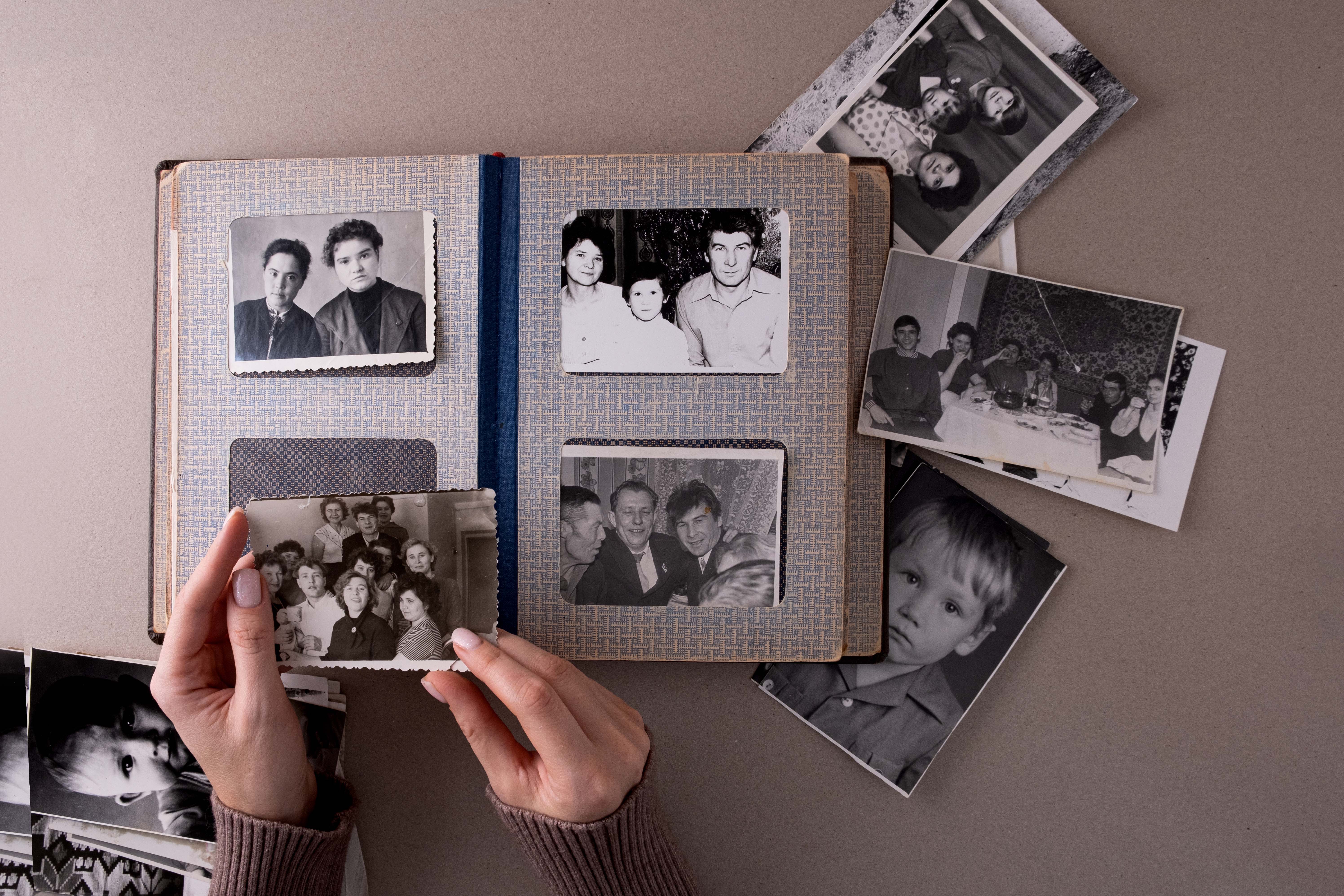
Use Old Photos to Bring Stories Back
Old photos are one of the easiest ways to help someone remember.
You can sit down with a stack of printed pictures, a photo album, or even a folder of digital images, and simply ask, “What do you remember about this?”
That one question can open up stories that may not have come out any other way.
A photo of an old house can bring back a whole season of childhood. A picture from a family vacation can lead to stories about what life was like at that time. A photo of a person your kids never met can help preserve family connections that might otherwise fade away.
The important thing is not to rush.
Let the person look at the photo. Let them remember. Let them wander a little. Sometimes the best stories come out after a pause, when someone suddenly says, “Oh, I forgot about this…”
Those are the moments worth catching.
Record More Than One Conversation If You Can
A lot of people try to document family history in one big sitting.
That can work, but it can also be tiring.
If the person you are interviewing is older, emotional, or simply not used to being on camera, it may be better to record a few shorter conversations instead of one long one.
The first conversation might cover childhood. Another could focus on marriage, parenting, work, faith, family traditions, or lessons learned over time.
Shorter conversations can also help people remember more between sessions. Someone may finish the first interview and call you later saying, “I thought of something else I should have told you.” That is a good thing. It means the process is working.
Documenting family history is not about forcing everything out in one day.
It is about creating room for stories to come back.
Think About Who the Video Is Really For
Before you start, it helps to think about who you are making the video for.
Is it for the children? The grandchildren? Future generations? The whole family? Is it meant to preserve family history generally, or is there one person’s wisdom you especially want to capture?
This matters because it can shape the questions you ask.
If the video is for grandchildren, you may want to ask more about what life was like when the person was young, what family values they hope continue, and what advice they would give to future generations. If the video is for adult children, you may want to ask about parenting, marriage, sacrifice, decisions, and the things they may not have understood when they were younger.
You do not need to make the person feel like they are giving a formal message to the future.
But having the audience in mind helps guide the conversation toward something your family will actually treasure later.
Save the Files in More Than One Place
Once you record the video, please do not leave it sitting only on your phone.
This is one of the most important practical steps.
Upload it somewhere safe. Save a copy to a hard drive. Share it with another trusted family member. Make sure the file name makes sense so people can find it later.
Something as simple as “Grandma Family History Interview - June 2026” is much better than a random file name your phone creates automatically.
A family history video is too important to lose because of a broken phone, a forgotten password, or a laptop that gets replaced.
The recording is the first step. Preserving it properly is what makes it last.
Do Not Wait for the Perfect Time
This may be the most important part.
There is rarely a perfect time to start documenting your family’s history on video.
The house may not be clean. The lighting may not be perfect. Someone may feel nervous. You may not know every question to ask. The video may feel a little awkward at first.
That is okay.
Start anyway.
Because the stories you preserve imperfectly are still preserved. The conversation you record on a normal afternoon may become priceless to your family later.
Most families do not regret starting too soon.
They regret waiting until they no longer can.
When You May Want Help
You can absolutely begin documenting family history on your own.
In fact, I think every family should record something, even if it is simple.
But there are times when it helps to have someone guide the process.
Sometimes the story feels too important to leave to chance. Sometimes the person being interviewed is more comfortable opening up to someone outside the family. Sometimes the family wants the finished video to feel more complete, with good lighting, clear audio, multiple camera angles, old photos woven in, and a conversation that goes deeper than basic questions.
That is where a guided Legacy Film can help.
At Story & Legacy Films, we help families preserve life stories, values, memories, and hard-earned wisdom through cinematic, interview-driven films. The goal is not to make someone perform on camera. The goal is to help them feel comfortable enough to share the stories their family may not know to ask for.
Because documenting your family’s history on video is not just about saving information.
It is about preserving presence.
It is about giving your family a way to hear the voice, see the face, and understand the meaning behind the life that helped shape them.
Start With One Story
If you are wondering how to start documenting your family’s history on video, do not make it bigger than it needs to be.
Choose one person.
Choose one comfortable place.
Ask about one meaningful season of life.
Then listen.
That is how it begins.
Over time, those conversations can become one of the most valuable non-financial inheritances your family will ever receive.
If you would like help preserving your family’s stories in a guided, cinematic way, fill out the form below. We would be honored to help you create something your family can return to for generations.